

How To Fix A Ball Joint
The chassis and suspension of a modern car are composed of different elements, the purpose of which is to provide maximum comfort while driving the vehicle, as well as to minimize the stress on other elements.
A ball joint is one of the most important elements of a car's suspension. Consider its purpose, device, main faults and replacement options.
What is a ball joint
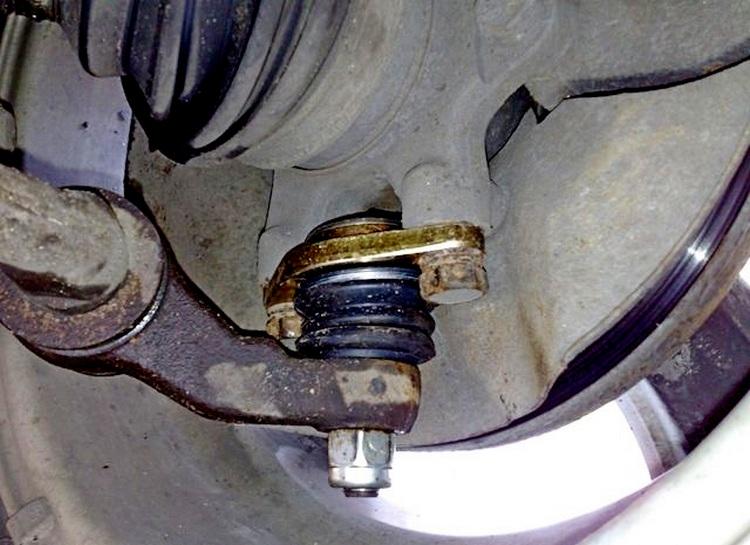
The part name indicates that it serves as a support. In this case, the levers of the swivel wheels of the machine and the hub rest on it. Depending on the car model, the ball joint will have a slightly modified structure, but basically they are all similar to each other. They are in the form of a ball, which has a fastening pin, which is housed in a metal case.
Why do you need a ball joint
Since the suspension arms and wheel hubs are constantly moving (without this, maneuvering and soft ride is impossible), the mount should not interfere with their movement. But at the same time, the movement of these parts must be within strict limits.
The purpose of the ball joint is to allow the wheels to rotate and turn without hindrance, but to prevent them from moving along the vertical axis (to provide the wheels with a constant vertical position).
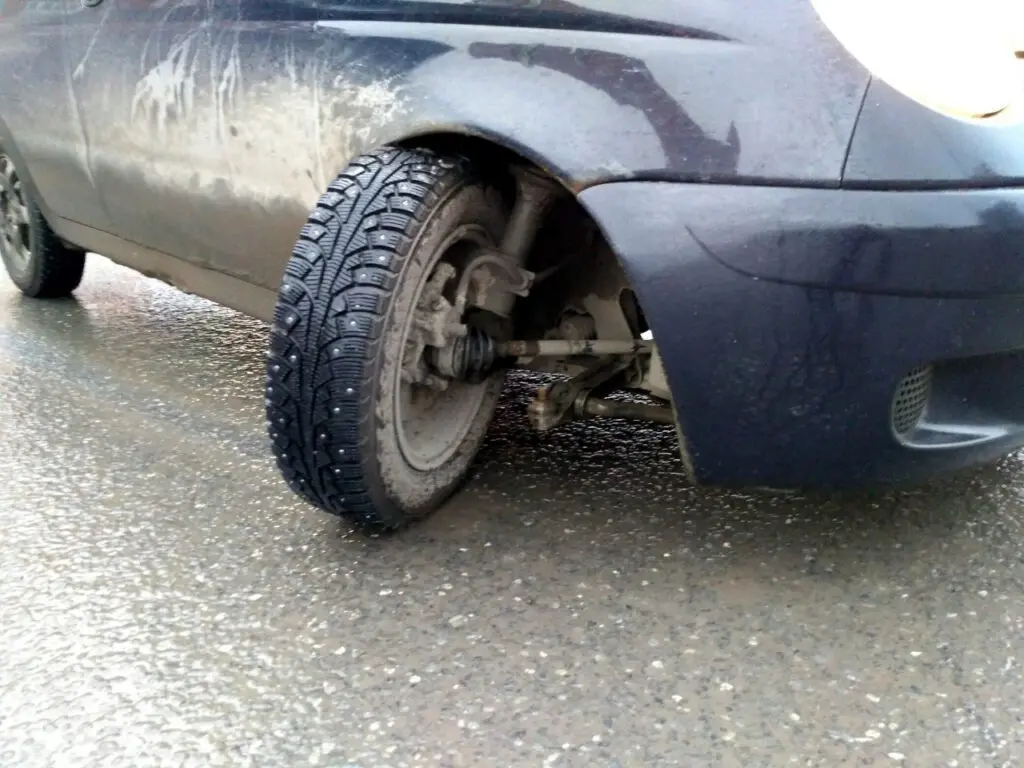
It should be noted that the hinge mount is used not only in this unit for fixing the hub and the lever. A similar part is found in the steering, camber levers or some types of shock absorbers (for example, in the trunk lid or bonnet).
The history of the creation of the ball joint
Before the invention of ball mechanisms, pivots were used in automobiles. This is a bolt with a needle or roller bearing, which provided some maneuverability to the front wheels, but the suspension was notable for its rigidity, since the levers did not have as much free play as in modern vehicles.
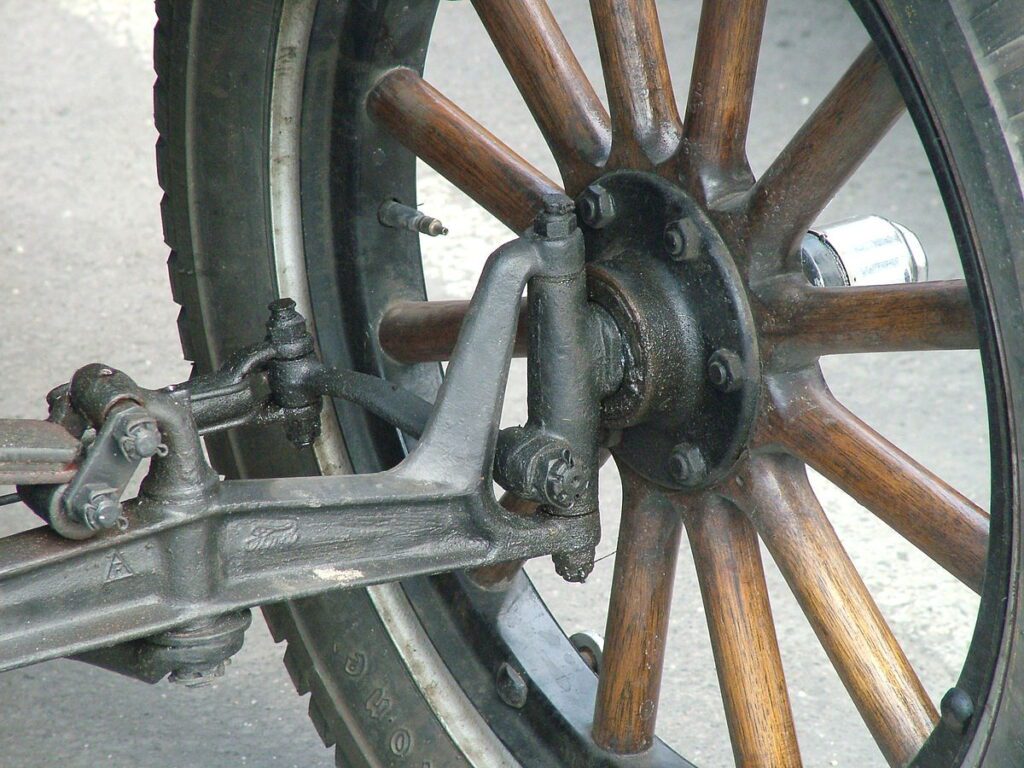
There were various mechanisms, consisting of several rods with bearings, which made the suspension softer. But the design of such units was complicated, and their repair was quite laborious. The main cause of failure is loss of lubrication in the bearings.
In the early 1950s, an innovative design emerged that made this assembly as simple as possible. These were ball joints. Due to the simple design, their maintenance was simplified as much as possible, but at the same time the part gave more freedom to the swivel wheel - the stroke during compression and rebound of the suspension, as well as the rotation of the fist on which the hub is fixed.
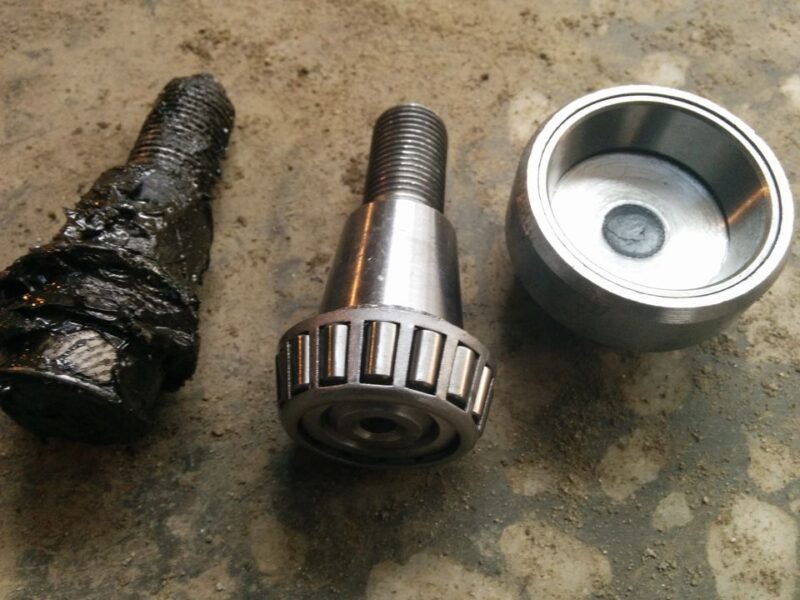
After only ten years, this part began to be used in most passenger cars, and by the mid-60s. pivots remained mainly in trucks and off-road vehicles.
Ball joint device
The first ball joints consisted of two halves, which were joined together by welding. To make the part last longer, it was originally serviceable. That is, it had to be lubricated, since the pin and the spring inside the case faced a large load. A slightly later development lost the spring with the pressure plate, and instead the design received a plastic sleeve.
To date, the machines use maintenance-free modifications that have a structure similar to the ones mentioned above. The only difference is that a more durable material is used instead of plastic.
The device of such a support includes:
- Forged steel body;
- Ball-point finger that fits into the body;
- Nylon liner that prevents metal parts from contacting each other;
- The whole part is enclosed in a boot.
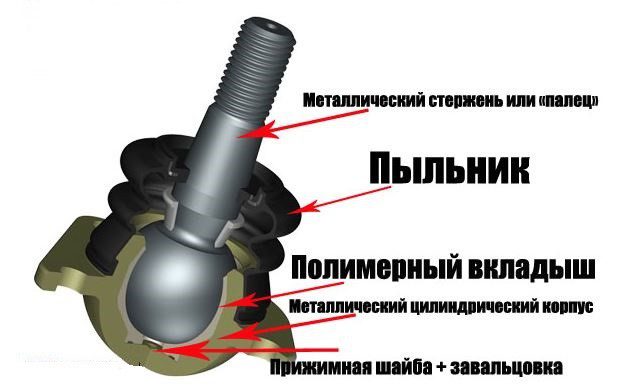
For the manufacture of these elements, a special stamping technology is used, thanks to which a small part is able to withstand huge mechanical and thermal loads.
It is not uncommon for auto parts manufacturers to implement a ball assembly with a lever, which makes it easier to repair the car. Of course, in this case, the procedure will be more expensive compared to the standard hinge mechanism. In addition to the cost of the hinge itself, you will have to pay for the entire lever.
How to check the ball joint
Despite the fact that the ball is made of materials that allow the part to be used for a long period, it still becomes unusable. For this reason, routine suspension diagnostics are required.
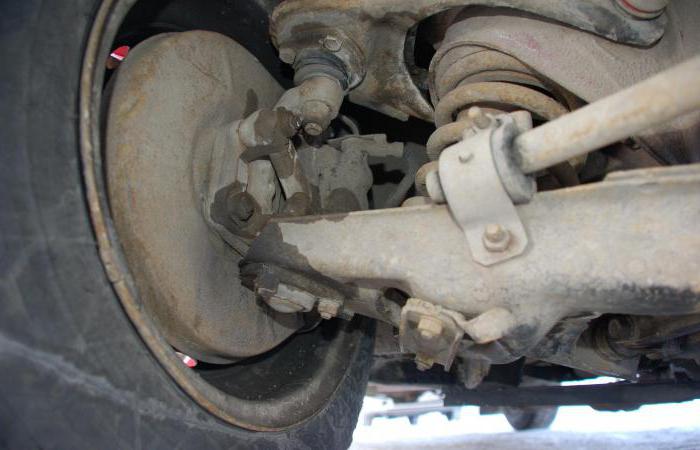
Ball check is carried out at special stands. In this case, it is easier to identify the malfunction of a specific unit than by visual inspection. However, the ball joint can also be tested at home.
Here are some ways:
- Revealing noise. With the engine turned off, rock the machine from side to side. At this point, you should listen to if the suspension emits clicks or knocks. For this method, you should seek outside help. If a knock of a part was detected, it must be replaced;
- Rolling wheels. In this case, you also cannot do without help. Cars are jacked up or lifted on a lift. One person is inside the car and holds the brake pedal. The other swings each wheel individually. If there is a backlash, then the ball must be replaced.
Signs of malfunction of ball joints
A defective ball joint increases the risk of an emergency. There is no single standard for how long a given part should last. In some car models, its resource can be about 150 thousand kilometers. For this reason, the replacement schedule must be specified in the vehicle operating manual.
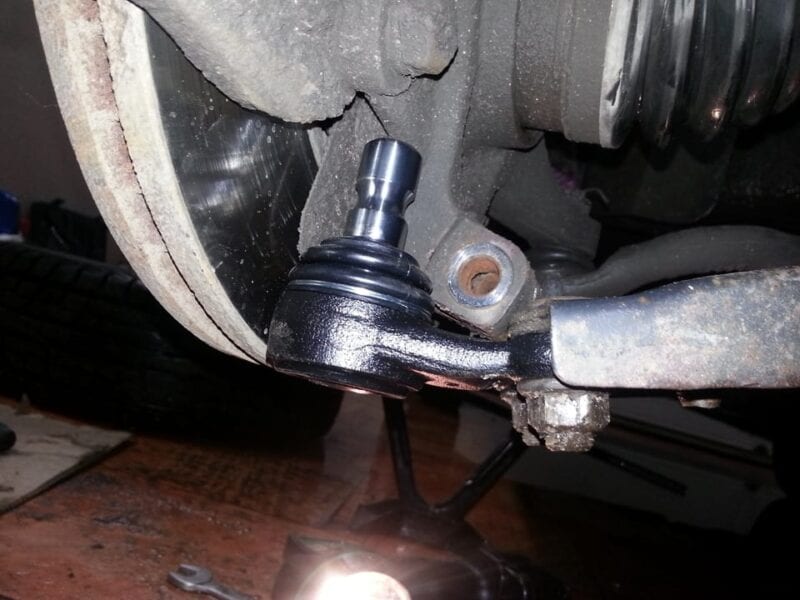
This element of the car's suspension is extremely rare. Most often, this is preceded by some signs:
- Suspension noises when driving slowly over obstacles - pits or speed bumps. These sounds come from the front of the car;
- During the ride, the wheel swings to the sides. This is due to backlash in the support. This symptom cannot be ignored, because under load, the part can burst and the wheel will turn out. The most dangerous situation is when this happens at a railway crossing, therefore, in the event of a backlash, the ball must be replaced as soon as possible;
- Uneven wear on the front wheel tires (different types of rubber wear are described in a separate review);
- When turning the wheels, a creak is heard (a crunch during movement indicates a malfunction of the CV joint).
Reasons for the failure of the ball joint
Although the part is more durable compared to the pivots, the same forces still act on it. Any mechanism sooner or later falls into disrepair, and some factors accelerate this process. Here are some of them:
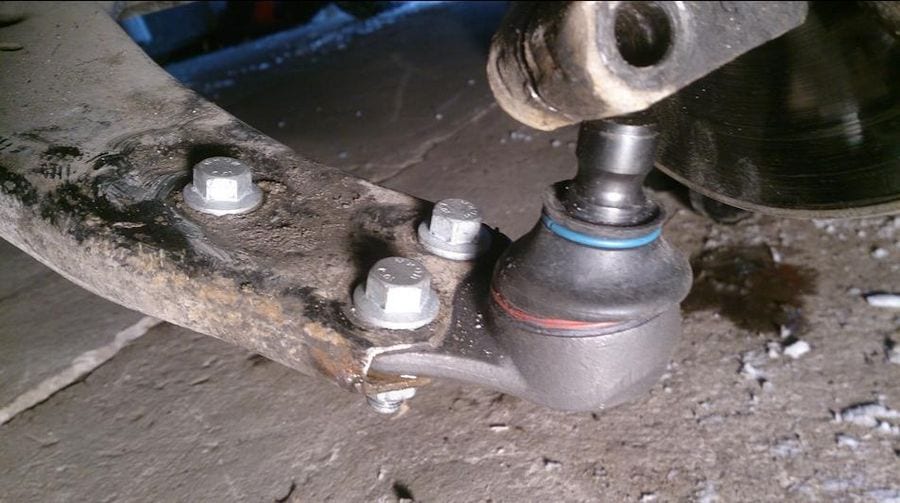
- The boot was torn. Because of this, moisture, sand and other abrasive substances enter the assembly. If a periodic visual inspection is carried out, this problem can be detected at an earlier stage and prevent premature repair of the unit;
- Driving off-road or on poorly paved roads. In this case, the ball joint is more likely to experience severe stress. For this reason, it has to be changed earlier than the manufacturer indicates;
- Untimely lubrication of serviced parts;
- Fastening pin wear. This leads to an increase in play, and the finger just pops out of the socket.
An example of replacing a ball joint
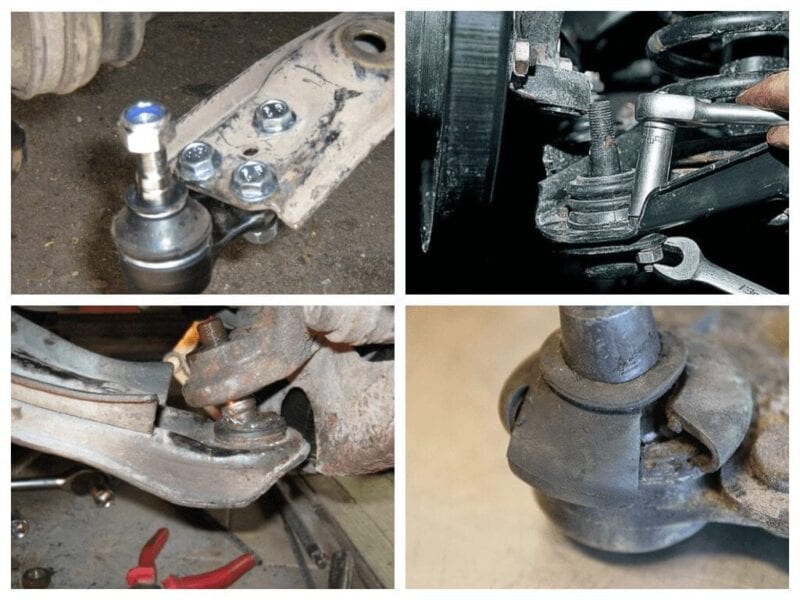
The basic rule for replacing ball valves is to change the kit, and not individually. This applies to all car models. The work is performed in the following sequence:
- The machine is lifted on a jack or lift;
- The fastening bolts of the lever are unscrewed (you need to make an effort and use VD-40, since the thread often sticks). They are not completely unscrewed;
- The ball fixing bolt is unscrewed;
- The support is pressed out of the hub fist using a special tool, but if it is not there, then a hammer and chisel will help perfectly;
- When the ball is disconnected from the fist, you can completely unscrew the lever;
- While the lever is disconnected, pay attention to the silent blocks (about what they are and why change them, told separately);
- In the lever, the hinge is fixed with a retaining ring, and a boot is put on on top. These parts are removed and the ball is knocked out of the seat;
- The new support is pressed into the lever, fixed with a retaining ring, lubricated and the boot is put on;
- The lever is connected to the subframe and the bolts are baited, but not completely tightened (so that later it would be easier to unscrew the bolts, nigrol is applied to the thread);
- The finger of the new support is directed towards the attachment in the fist (you need to make an effort for this);
- The support bolt is tightened to the end;
- The car is lowered and the lever fasteners are tightened under its weight.
The procedure is repeated on the other side of the machine.
Here is a short video on how the procedure is visually performed:
SIMPLE BALL REPLACEMENT. # car repair "Garage No. 6"
Useful maintenance tips
To avoid breakdowns and emergency repairs to the ball joint, a small unit diagnosis should be carried out in the intervals between the scheduled maintenance dates. At this point, first of all, a visual inspection of the anthers is performed, since when they break, the part loses its lubrication and grains of sand enter the ball, accelerating the wear of the element.
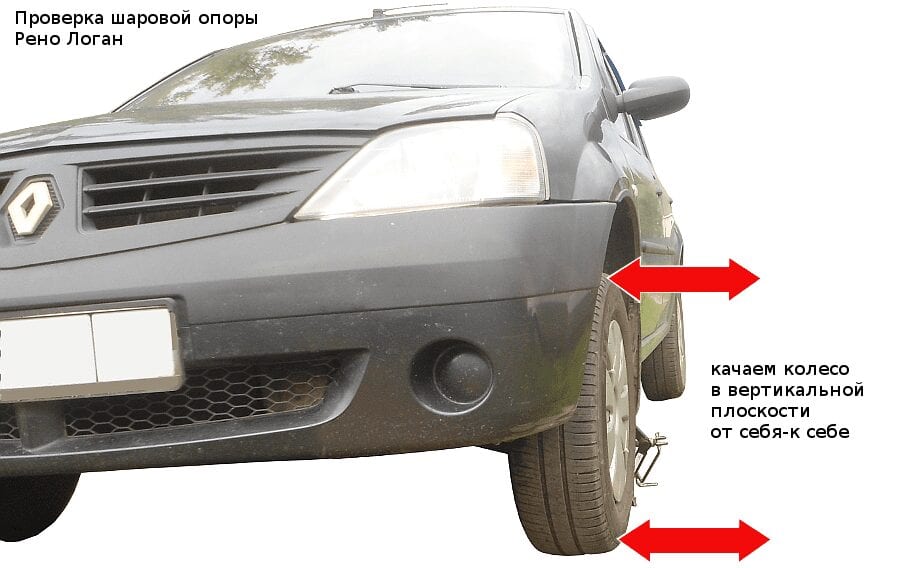
A little earlier, we have already considered one method that allows you to determine the wear of the hinge - swing the wheel fixed by the brakes. Since the part is mostly maintenance-free, if defects are detected, it is simply replaced with a new one.
The driver can keep the suspension, including the support, if he chooses more or less flat sections of the road (bypassing holes) and avoids fast off-road driving. Also, many drivers make one mistake when they run over a speed bump. They hold the brake until the front of the car runs over an obstacle. In fact, the brake must be released before the wheel hits the obstacle. This prevents the driver from severe shock to the suspension.
In fact, the ball is a fairly strong part. If you use the car carefully, the part will remain in good condition throughout the entire period established by the manufacturer.
How To Fix A Ball Joint
Source: https://avtotachki.com/en/chto-takoe-sharovaya-opora-i-mozhno-li-ee-otremontirovat/
Posted by: savoryrurnins1986.blogspot.com
0 Response to "How To Fix A Ball Joint"
Post a Comment